
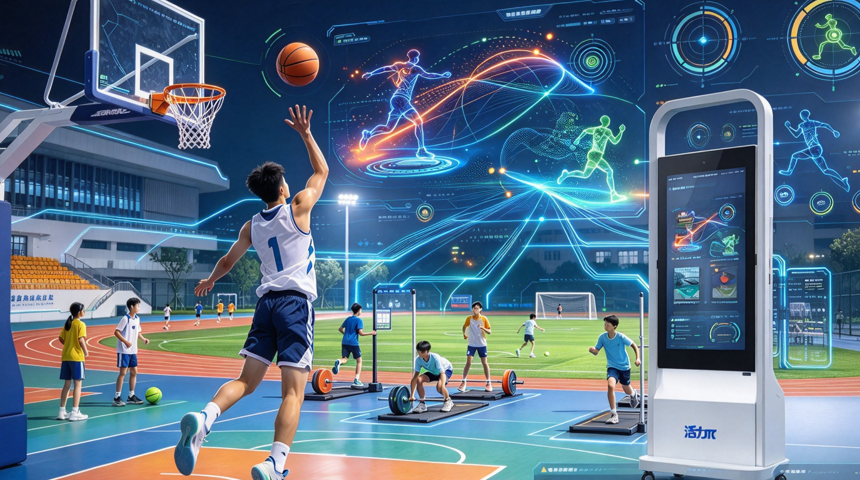
1. Introduction: Why Smart Sports Is the Hot Topic of 2026
In 2026, sport is no longer just about effort and instinct — it is about data. Sensors measure every swing, algorithms analyze every movement, and cloud platforms turn raw numbers into coaching advice. This shift, often called smart sports, is happening in three places at once: school gyms, living rooms and competitive arenas. In this guide, we look at the trends driving smart sports this year, the sensor technology that makes it possible, and the practical ways that digital PE systems, home fitness platforms and smart rackets are changing how people train.
At the heart of this transformation are companies that have been building intelligent sports equipment for decades. Shenzhen Earth Electronics Co., Ltd., a Shenzhen-based high-tech enterprise founded in 2000, has dedicated more than 25 years to intelligent sports and was the first private enterprise in the world to develop a smart badminton racket. Under its Vitality Pi brand, its AI smart sports solutions cover the full journey from campus to court to living room, all built on a single core of MEMS inertial sensors, IMU-vision fusion and cloud analytics.
2. Hot Topics Driving Smart Sports in 2026
2.1 Policy pushes AI into fitness and education
The first hot topic is policy. China's National Fitness Plan (2026-2030) explicitly calls for wider use of AI in fitness facilities, sports events, exercise guidance and public fitness services, and encourages public sports venues to adopt digital upgrades, according to CGTN. Around the world, physical education is being measured, tracked and reported like any other subject, and digital equipment is moving from optional to expected in school procurement.
2.2 AI moves from elite arenas to everyday exercise
The second hot topic is the migration of AI from elite competition to everyday exercise. Xinhua reports that AI-assisted officiating and analytics are already familiar at events such as the FIFA World Cup and Grand Slam tennis tournaments; at the 2026 China International Fair for Trade in Services, organizers turned the sports services exhibition into a working venue where AI supported training, officiating and public participation.
2.3 AI-enabled PE lessons are already in classrooms
In schools, the change is visible in the classroom. Xinhua's coverage of AI-enabled PE lessons describes 'AI sports corridors' where students enter systems through facial recognition, have their movements captured and analyzed, and receive results instantly — a model that boosts enthusiasm for self-directed exercise during breaks and after school.
2.4 Market numbers confirm the momentum
The figures confirm the momentum. According to Mordor Intelligence, the wearable devices in sports market is expected to grow from USD 98.06 billion in 2026 to USD 120.05 billion by 2031, a CAGR of 4.13 percent. Verified Market Reports estimates the smart wearable sports devices segment at USD 27.1 billion in 2025, heading toward USD 67.3 billion by 2034 at a CAGR of 10.6 percent. Different reports use different scopes, but the direction is the same: sensors and analytics are becoming standard equipment in sport.
3. The Sensor Technology Behind Smart Sports
Under every smart sports product sits a sensor. MEMS inertial sensors — tiny accelerometers and gyroscopes — measure acceleration and rotation many times per second. Strapdown inertial navigation algorithms then fuse those signals into meaningful metrics such as speed, angle, force, force curves and 3D motion graphics. The Vitality Pi brand builds its equipment on self-developed MEMS strapdown inertial navigation technology, the same family of technology used in professional sports analytics systems.
Sensors alone, however, cannot explain technique. That is where IMU-vision fusion comes in: inertial data is combined with visual analysis so the system captures the details of force generation in real time, compares each movement with a standard motion model and highlights the differences. Coaches, teachers and players can finally see not only what happened, but why. To go deeper, read how MEMS inertial sensors capture motion, and compare the full range of approaches in our complete guide to sports motion analysis.
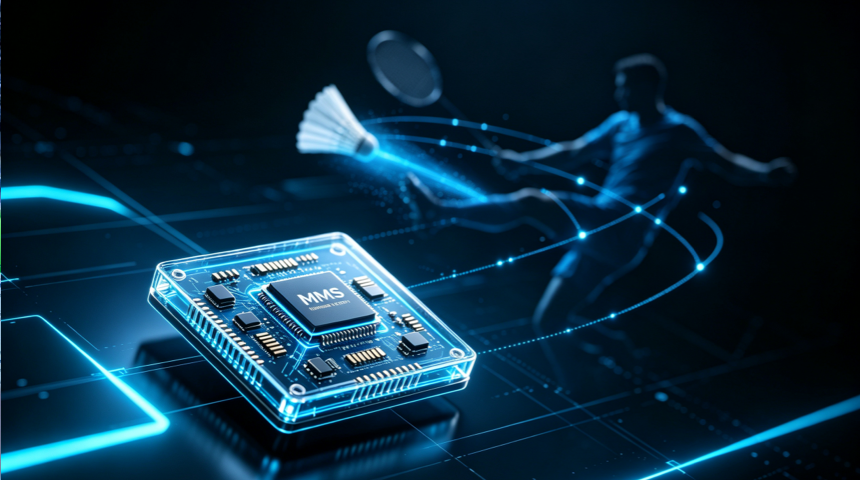
Figure 1. MEMS inertial sensor technology inside Vitality Pi smart sports equipment (source: global.szearth.com).
4. Digital PE Systems Are Reimagining School Physical Education
For schools, a digital PE system turns physical education into a measurable, inclusive subject. A typical deployment includes a teacher portal, a student portal, a dual supervision platform and a big data center, together with digital PE teaching materials. Teachers can plan data-driven lessons, supervise students in real time and give precision feedback after every class, while administrators see school-wide fitness trends at a glance.
The results are being recognized by official bodies. The system has been selected for the Liaoning Province recommended education equipment catalog for both 2024 and 2025, allocated as physical education and health teaching equipment in Beijing primary and secondary schools, and included in Liaoning's application innovation case collection. It is already used in more than 50 universities. Schools that adopt an AI-powered digital PE system typically see higher engagement, fairer assessment and stronger alignment with national fitness goals. Our articles on AI in K-12 physical education and the complete digital physical education guide walk through the implementation journey, and the announcement on the Liaoning education equipment catalog documents the official recognition.
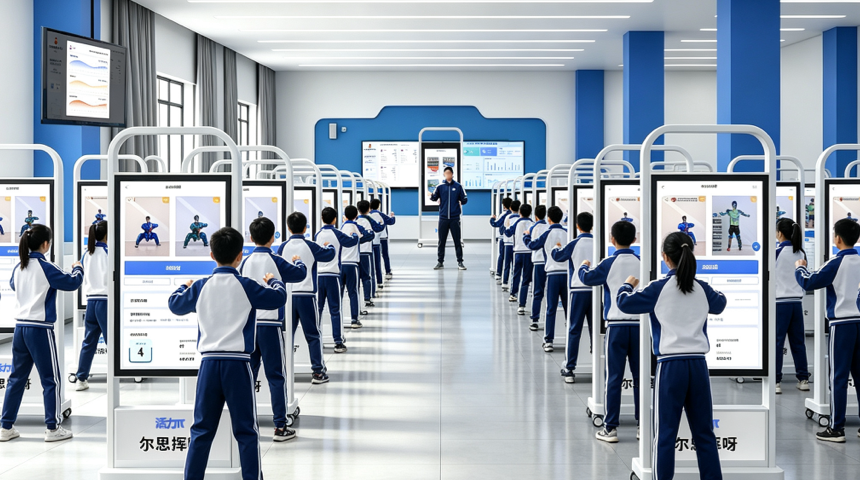
Figure 2. An AI smart sports classroom powered by the Earth Digital Science and Education System (source: global.szearth.com).
5. Smart Home Fitness: Data-Driven Training for All Ages
Smart sports is not limited to the campus. The AI Smart Sports Skills Platform, a smart home fitness solution, is designed for home use and suitable for all age groups, covering sports learning, fat-loss fitness, PE entrance exam training and audio-visual entertainment. Paired with Bluetooth-enabled equipment, the platform guides users through structured courses and records every session automatically.
The workflow is simple: connect the smart equipment through the app, enter the training mode, exercise while data is collected, then review personal records and rankings. Because every session produces data, family members can track progress over weeks and months, and parents can see exactly how much exercise their children complete at home. Whether you are a student preparing for PE entrance exams or an adult building a consistent exercise habit, a smart home fitness platform removes the guesswork from training.
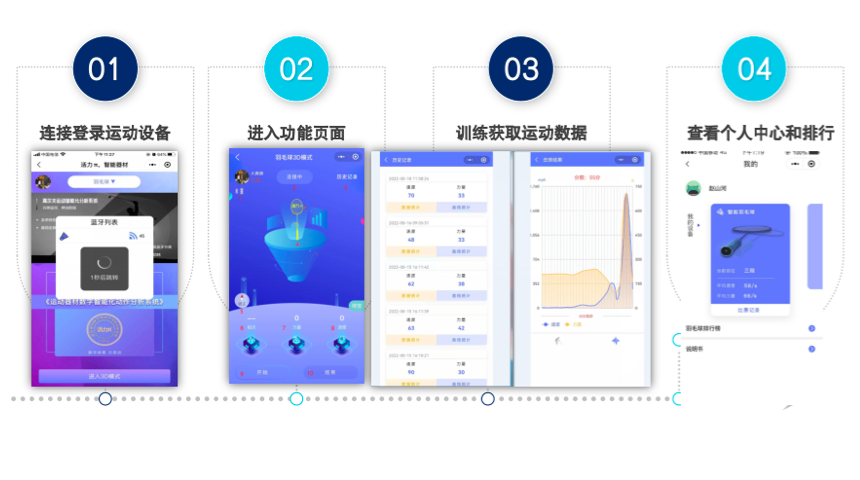
Figure 3. From device connection to personal dashboards: the smart sports app workflow (source: global.szearth.com).
6. Competitive Sports: Smart Rackets and Real-Time Analytics
At the competitive level, the competitive sports platform supports badminton, table tennis, golf and tennis. Equipment connects directly via Bluetooth, an inertial navigation chip collects real-time sports data, and cloud analysis produces skill-level ratings and smart player matching. Shenzhen Earth was the first private enterprise in the world to develop a smart badminton racket, and the Vitality Pi smart racket bottom cap can upgrade an ordinary racket into a data-collecting instrument.
What can athletes do with this data? They can quantify swing speed and force curves, compare technique against standard movements, review performance trends and find opponents of similar skill levels. Our article on smart badminton training shows how data analytics elevates competitive performance. For the full library of technology articles and product updates, browse the smart sports insights hub.
7. Smart Sports Solutions at a Glance
The table below summarizes the three AI smart sports solutions and where each one fits best.
| Solution | Best For | Core Capabilities | Typical Benefits |
|---|---|---|---|
| Earth Digital Science and Education System | K-12 schools and healthy campuses | Teacher and student portals, dual supervision platform, big data center, digital PE teaching materials | Objective assessment, precision teaching, school-wide fitness tracking |
| AI Smart Sports Skills Platform | Home users of all ages | Sports learning, fat-loss fitness, exam training, audio-visual entertainment, Bluetooth devices | Consistent training, automatic records, family engagement |
| Competitive Sports Platform | Badminton, table tennis, golf and tennis players | Bluetooth plus inertial chip, real-time data collection, cloud analysis, skill rating, smart matching | Quantified technique, performance comparison, rankings |
8. 2026 Smart Sports Trends at a Glance
Five trends are shaping smart sports this year, summarized below.
| Trend | What It Means | Where You See It |
|---|---|---|
| AI-driven coaching | Algorithms provide instant technique feedback and lesson adjustments | Digital PE classrooms, smart rackets, home training apps |
| Sensor-based motion capture | MEMS and IMU sensors convert movement into objective numbers | Smart rackets, wearable devices, training equipment |
| Policy-driven digital PE | Governments include digital PE equipment in official catalogs | School equipment lists such as the Liaoning 2026 catalog |
| Smart equipment, not just wearables | Sensors are embedded inside the gear players already use | Smart badminton rackets, paddles and clubs |
| Personalized home training | Data adapts programs to each individual's level and goals | Home fitness platforms and mobile apps |
9. How to Choose the Right Smart Sports Solution
Start with the scenario. Schools should look for a digital PE system with portals, supervision and reporting; families should look for a smart home fitness platform with structured courses; athletes should look for a competitive sports platform with real-time data and skill ratings. Then check the technology: genuine MEMS or IMU sensing, AI analysis depth that covers speed, angle, force, curves and 3D graphics, and a cloud platform that keeps data accessible and comparable over time. Finally, look for official recognition — certifications, recommended equipment catalog listings and proven deployments — as evidence that the solution works in the real world. A single technology core can serve all three scenarios, which is exactly the design of Shenzhen Earth's AI smart sports solutions.
10. Frequently Asked Questions (FAQ)
What is smart sports technology?
Smart sports technology combines sensors, AI and cloud platforms to measure, analyze and improve physical activity. It appears in digital PE systems, smart home fitness platforms and smart rackets that record speed, angle, force and movement patterns.
How do MEMS inertial sensors work in sports equipment?
MEMS sensors contain tiny accelerometers and gyroscopes that measure acceleration and rotation. Strapdown inertial navigation algorithms fuse this data into metrics such as swing speed, force curves and 3D motion graphics, without requiring external cameras.
What is a digital PE system and how does it help schools?
A digital PE system is a platform for school physical education that includes teacher and student portals, supervision tools, digital teaching materials and a big data center. It helps teachers give precision feedback, helps students train more effectively and gives administrators measurable fitness data.
Can a smart badminton racket really improve performance?
Yes, in the sense that it provides objective data. A smart racket measures swing speed, angle and force, compares technique with standard movements and tracks progress over time, giving players and coaches evidence they can act on.
Is smart home fitness suitable for all ages?
Yes. Platforms such as the AI Smart Sports Skills Platform are designed for home use across all age groups, with sports learning, fat-loss fitness, exam preparation and entertainment modes that adapt to each user's level.
How do I get started with a smart sports solution?
Identify your scenario — school, home or competitive — then choose the matching platform, connect your smart equipment via Bluetooth and begin with a structured course. Records are collected automatically, so progress becomes visible within a few sessions.
11. Conclusion
Smart sports in 2026 is no longer a preview of the future; it is the present. Policies are pushing AI into fitness and education, markets are growing at double-digit rates, and equipment that used to be passive is now sensing, analyzing and coaching. From AI-powered classrooms and data-driven home workouts to smart rackets on the court, the common thread is measurable progress. Whether you are a school leader, a coach or a fitness enthusiast, the starting point is the same: choose equipment and platforms built on real sensor technology, and let the data guide the next session. Explore how Shenzhen Earth's AI smart sports solutions fit your school, home or training program, and keep up with new releases in the smart sports insights hub.
Sources and References
[1] CGTN — National Fitness Day: How AI is making exercise more personalized in China (August 2026)
[2] Xinhua (news.cn) — AI体育课:当算法走进操场 (April 2026)
[3] Xinhua via China.org.cn — Feature: AI moves from elite competition to everyday sports in China (September 2026)
[4] Mordor Intelligence — Wearable Devices in Sports Market (2026-2031)
[5] Verified Market Reports — Global Smart Wearable Sports Devices Market (2026-2034)
[6] Shenzhen Earth Electronics Co., Ltd — official website (company and product facts)
Company facts and product information in this article are taken from the official Shenzhen Earth website (global.szearth.com). Market figures are attributed to the sources above; report scopes and definitions differ, so figures from different providers should not be mixed or compared directly.
Explore AI Smart Sports Solutions
See how Shenzhen Earth applies sensor technology and data analytics across education, home fitness and competitive sports.
Explore Smart Sports Solutions