
Introduction
For decades, K-12 physical education (PE) has relied on manual instruction, subjective assessment, and one-size-fits-all lesson plans. Teachers struggle to monitor every student’s form, track long-term progress, and accommodate diverse fitness levels, while students often lack personalized feedback to improve their skills. Today, advances in artificial intelligence and motion sensing technology are reshaping this landscape, giving rise to digital PE teaching systems that turn traditional PE classes into data-driven, engaging, and inclusive learning environments. This guide explores how AI is transforming school PE, how digital PE platforms work, and the tangible benefits they deliver to educators, students, and school administrators.
1. The Limitations of Traditional K-12 Physical Education
Traditional PE programs face persistent structural challenges that limit their educational impact. First, teacher-student ratios make individualized attention nearly impossible: a single PE instructor typically oversees 30–50 students per class, making it difficult to correct improper movement form, identify students at risk of injury, or recognize those ready for more advanced training. Second, assessment is often subjective, based on teacher observation rather than quantifiable metrics, leading to inconsistent grading and unclear growth pathways for students. Third, PE learning is largely confined to the classroom; there is rarely a structured bridge between in-school instruction and at-home practice, breaking the continuity needed for skill development and long-term fitness habits. Finally, administrative tasks such as attendance tracking, performance recording, and report generation consume valuable teaching time, reducing the hours available for actual student engagement.
These gaps have become more pronounced as global education systems prioritize student wellness and holistic development. Schools are increasingly seeking technology-enabled solutions that can scale quality PE instruction, improve student outcomes, and support long-term health literacy.
2. What Is a Digital PE Teaching System?
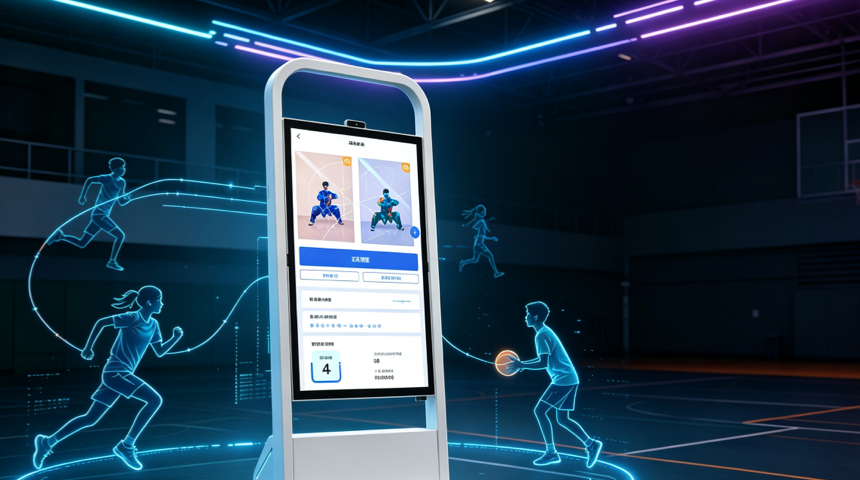
A digital PE teaching system is an integrated technology platform that combines hardware sensors, software portals, and cloud-based data analytics to digitize every aspect of physical education. At its core, the system uses motion tracking technology—often built on MEMS inertial sensor technology and computer vision—to capture student movement in real time, compare it against standardized technical models, and deliver instant feedback.
The Earth Digital Science and Education System, for example, is built around four interconnected modules:
Teacher Portal: A centralized dashboard for lesson planning, class management, attendance tracking, and performance review.
Student Portal: A personal interface where students can view their motion data, access learning materials, track progress, and complete assigned practice tasks.
Dual Supervision Platform: A real-time monitoring layer that ensures class safety, tracks engagement levels, and alerts instructors to anomalies.
Big Data Center: A cloud-based analytics engine that aggregates class-wide and individual performance data to inform teaching decisions.
Complemented by digital PE teaching materials that include instructional videos, standard movement libraries, and structured lesson plans, these systems create a complete digital ecosystem for PE instruction. Unlike standalone fitness apps, digital PE systems are designed specifically for educational environments, aligning with national curriculum standards and supporting school-wide administrative workflows.
3. Core Benefits of AI-Driven PE for Schools
3.1 Real-Time Supervision & Dual Management
One of the most impactful features of smart PE systems is dual supervision capability. In traditional classes, teachers can only observe a small number of students at any given moment. AI-powered platforms continuously monitor every student’s movement, activity duration, and intensity level simultaneously. The system can flag students who are performing exercises with incorrect form, those who are underperforming relative to their baseline, and even those showing signs of potential fatigue or injury risk. This dual supervision—teacher-led instruction plus AI-powered monitoring—creates a safer, more accountable learning environment, especially for large class sizes.
3.2 Precision Teaching with Standardized Motion Libraries
AI PE systems move beyond generic fitness tracking to deliver precision teaching. Each skill or exercise is paired with a standard movement model developed by professional coaches and PE curriculum experts. As students perform the movement, the system captures key biomechanical data—such as joint angles, movement speed, force distribution, and motion trajectory—and compares it in real time to the standard. Students receive immediate visual and audio feedback on where they deviate from proper form, allowing them to make adjustments mid-practice rather than waiting for teacher feedback after the fact.
This level of precision is particularly valuable for PE entrance exam training, where standardized test items require consistent, technically correct performance to score well.
3.3 Big Data Centers for Student Progress Tracking
Digital PE systems eliminate the need for manual record-keeping by automatically logging every student’s performance data in a centralized big data center. Teachers can generate detailed reports on individual students, entire classes, or grade levels with a single click, tracking metrics such as skill mastery progress, fitness level changes, class attendance, and engagement rates over time. Administrators can use aggregate data to evaluate PE program effectiveness, allocate resources, and identify areas for curriculum improvement. For parents, access to student progress data creates greater transparency around their child’s physical development and fitness habits.
3.4 Inclusive Learning for Diverse Fitness Levels
AI-driven PE adapts to each student’s individual ability level, making PE more inclusive for students with varying fitness backgrounds, physical capabilities, and learning paces. The system can adjust exercise difficulty, provide modified movement options, and set personalized goals based on each student’s baseline performance. This reduces the anxiety many students feel in competitive PE environments and encourages greater participation from students who may have previously disengaged from physical activity.
4. How the Earth Digital Science and Education System Works
The Earth Digital Science and Education System is designed for seamless integration into existing school PE programs, with minimal training required for teachers and students.
4.1 Teacher Portal: Streamlined Instruction & Administration
The teacher portal serves as the command center for PE instructors. From the dashboard, teachers can:
Browse and select from a library of pre-built digital PE teaching materials aligned with national curriculum standards
Create custom lesson plans and assign practice tasks to individual students or entire classes
Monitor real-time class performance, including live movement data and engagement metrics
Automate attendance tracking and grade recording
Generate detailed progress reports for parent-teacher conferences and administrative reviews
By automating administrative workflows, the portal frees teachers to focus on what matters most: guiding students, providing personalized support, and fostering a positive class environment.
4.2 Student Portal: Personalized Learning & Self-Paced Practice
The student portal puts ownership of learning in students’ hands. Through the portal, students can:
Access instructional videos and standard movement demonstrations for upcoming lessons
Review their own performance data, including motion replays and form correction feedback
Track their progress toward skill mastery and fitness goals
Complete assigned at-home practice sessions and sync data back to their class record
View class leaderboards and achievement badges to stay motivated
This connection between classroom learning and independent practice is the foundation of the “learn in class and practice at home” model, which is further extended by dual-scenario AI sports solutions that bridge school and home environments.
4.3 Dual Supervision Platform: Safety & Accountability
The dual supervision platform combines AI monitoring with teacher oversight to create a safe, structured PE environment. The system continuously tracks movement intensity, form correctness, and activity duration for every student. If a student performs an exercise with dangerous form, or if their activity levels fall outside safe parameters, the system sends an immediate alert to the teacher’s dashboard. The platform also generates post-class reports on class engagement, injury risk indicators, and overall participation quality, helping teachers refine their instruction over time.
4.4 Big Data Center: Data-Driven Decision Making
At the backend, the big data center aggregates anonymized and individual performance data across the school or district. Education leaders can use this data to:
Evaluate the effectiveness of PE curriculum changes
Identify grade-level or school-wide fitness trends
Allocate equipment and staffing resources to areas of greatest need
Demonstrate PE program impact to school boards and education authorities
With proven deployment in over 50 universities across China, the Earth system has demonstrated measurable improvements in student engagement, skill acquisition, and PE teaching efficiency.
5. Real-World Impact: Outcomes from Deployed Campuses
Schools that have adopted digital PE systems report consistent, measurable improvements across key metrics. On average, schools see a 25–35% increase in student PE class engagement, as interactive feedback and gamified progress tracking make physical activity more enjoyable. Skill mastery rates improve by 30–40% due to immediate form correction and personalized practice paths. Teacher administrative time is reduced by 40–50%, as attendance, grading, and report generation are automated.
For schools building digital healthy campuses, the PE system serves as a core component of the broader student wellness ecosystem, integrating with other campus health initiatives to support holistic student development.
6. Implementing Smart PE: Steps for School Administrators
Adopting a digital PE system is a structured process that delivers maximum value when planned carefully.
Assess Current Needs: Evaluate your school’s PE pain points, curriculum goals, and technical infrastructure to identify priority features.
Select a Proven Solution: Choose a system with verified educational deployments, curriculum-aligned content, and strong technical support.
Infrastructure Preparation: Ensure reliable campus network coverage and compatible mobile devices for teachers and students.
Teacher Training: Provide hands-on training for PE instructors to build confidence in using the platform for instruction and administration.
Phased Rollout: Start with a pilot class, gather feedback, and expand gradually to full school deployment.
Continuous Optimization: Use data from the big data center to refine lesson plans and program structure over time.
7. Frequently Asked Questions
Q: Do digital PE systems replace PE teachers? A: No. Digital PE systems are instructional tools that augment teachers’ capabilities, not replace them. The technology handles repetitive monitoring, data recording, and basic form feedback, freeing teachers to focus on personalized instruction, student mentorship, and class management.
Q: What technical infrastructure is required to deploy a digital PE system? A: Most systems require standard campus Wi-Fi, compatible mobile devices or tablets for teachers and students, and access to a cloud platform. Many also work with dedicated sports equipment embedded with motion sensors.
Q: Can the system align with our local PE curriculum standards? A: Yes. Leading digital PE systems like the Earth Digital Science and Education System include customizable teaching materials that can be aligned with national, provincial, or local PE curriculum frameworks.
Q: Is student motion data secure and private? A: Reputable providers comply with student data protection regulations, storing data on secure cloud servers with strict access controls and anonymization for aggregate analysis.
Conclusion
AI is not just adding technology to physical education—it is fundamentally redefining what PE can be. By replacing subjective assessment with data-driven insight, one-size-fits-all instruction with personalized learning, and classroom-only learning with connected home practice, digital PE systems are creating more effective, inclusive, and engaging physical education for the next generation. As more schools embrace digital healthy campus initiatives, AI-powered PE will become a standard component of modern education, helping students build lifelong fitness habits and foundational movement skills.
For schools ready to take the next step, investing in a proven digital PE system is an investment in student wellness, teaching efficiency, and long-term educational outcomes.
Build a Smarter PE Program
Explore how Earth digital PE systems support teaching, supervision and student progress tracking.
Explore Digital PE