
1. Introduction: Why PE Exams Now Decide More Than Fitness
For students in China, the physical education entrance exam — commonly called the PE zhongkao — is no longer a formality. In 2026, PE scores are rising across provinces, new test items are being added, and physical fitness is becoming a measurable part of high school admission. Parents and students are asking the same question: how do we prepare seriously, and how do we train smartly? This guide explains what PE entrance exams test, why AI-powered training changes preparation, and how the same smart sports technology used in schools can support families at home.
The technology behind this shift comes from companies that have spent decades in intelligent sports. Shenzhen Earth Electronics Co., Ltd. has more than 25 years of experience, and its AI smart sports solutions power digital PE classrooms, home training platforms and competitive sports systems — all built on MEMS inertial sensors, IMU-vision fusion and cloud analytics.
2. Hot Topics: PE Exam Scores Are Rising Across China
2.1 Total scores keep climbing
The most visible hot topic is the value of PE in the zhongkao. Guiyang announced that its PE exam total will rise from 50 points for the 2026 cohort to 60 for 2027, 80 for 2028 and 100 for 2029, adding new items such as the 200-metre swim and the standing medicine ball throw. Qinghai raised its total from 50 to 70 points, combining on-site testing with 20 points of process-based assessment based on students' daily exercise records. CCTV's education coverage of the 2026 zhongkao reports that PE weighting is rising broadly, citing Qingyuan's increase from 65 to 90 points and Changsha's from 40 to 50.
2.2 Test items are multiplying
The second hot topic is variety. Hunan's plan, published by China Education Daily, raises PE weighting to an average of 8 percent of the total zhongkao score by 2027 and expands the test to 14 items, including standing long jump, rope skipping, table tennis, badminton and swimming. Fujian's education department keeps its total at 40 points but structures it into mandatory events such as the 800- or 1000-metre run and 200-metre swim, selected ball games, and drawn events such as the 50-metre sprint, standing long jump, rope skipping and pull-ups.
2.3 Assessment is becoming continuous
The third hot topic is how scores are calculated. Shenzhen's 2026 exam combines on-site testing with process-based evaluation: the three on-site event categories are averaged and converted at a weight of 0.36 for a maximum of 36 points, while process-based evaluation worth 14 points covers physical fitness testing, PE class participation and general sports knowledge. This means daily participation and school records now influence the final score, not just performance on exam day. These trends sit within the national direction set by the National Fitness Plan (2026-2030), which calls for wider use of AI in fitness facilities and exercise guidance, according to CGTN.
3. What PE Entrance Exams Actually Test
Exam items differ from city to city, so families should always check the official requirements published by their local education authority. That said, most PE zhongkao programs test the same underlying physical qualities, summarized below.
Table 1. Common PE Exam Categories and the Qualities They Measure
| Category | Typical Test Items | Physical Quality Measured | Why Data Helps |
|---|---|---|---|
| Endurance | 800m / 1000m running, 200m swimming | Cardiorespiratory endurance, pace control | Track pace and improvement over time |
| Explosive power | Standing long jump, medicine ball throw | Leg and arm power, coordination | Measure distance and force precisely |
| Strength | Pull-ups, sit-ups, rope skipping | Muscular endurance, rhythm | Count repetitions and technique quality |
| Ball skills | Badminton, table tennis, basketball, football | Coordination, technique mastery | Compare form with standard movements |
4. Why Data-Driven Training Beats Guesswork
Traditional exam preparation relies on effort and rough judgement: run more, jump more, hope for the best. Data-driven training replaces guesswork with measurement. MEMS inertial sensors inside smart equipment measure acceleration and rotation many times per second, and strapdown inertial navigation algorithms convert those signals into speed, angle, force, force curves and 3D motion graphics. IMU-vision fusion then compares each movement with standard motion models, so students can see exactly which part of a jump, throw or stroke needs correction. To understand the underlying technology, read how MEMS inertial sensors capture motion and compare approaches in our complete guide to sports motion analysis.
The practical difference is simple: a student who can see their standing long jump distance, reaction force and technique score after every attempt improves faster than one who only hears 'try harder'. Records also build a personal history, showing whether endurance is genuinely rising or just feeling better.

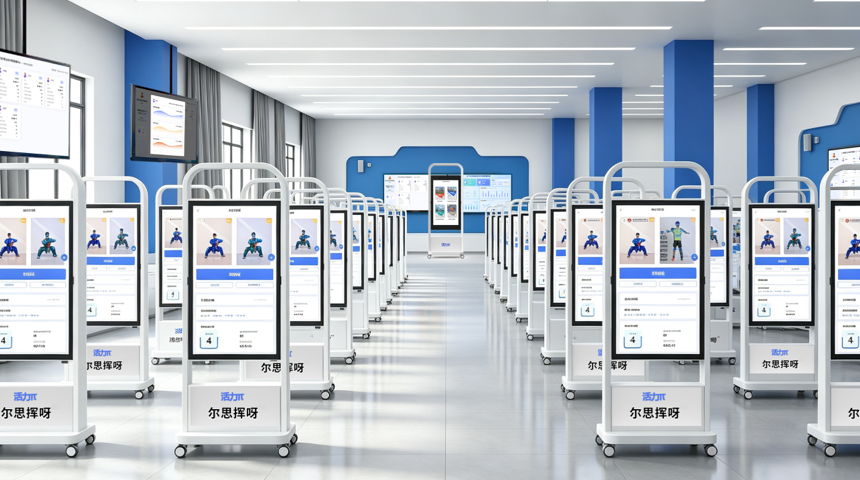
Figure 1. AI motion analysis turns exam practice such as the standing long jump into measurable feedback (source: global.szearth.com).
5. Training at Home and School with AI Smart Sports Platforms
Preparation works best when school and home reinforce each other. In school, a digital PE system gives teachers portals, supervision tools and a big data center to run data-driven PE lessons, and it has been selected for recommended education equipment catalogs, including the Liaoning education equipment catalog, and allocated as teaching equipment in Beijing schools. Our articles on AI in K-12 physical education and the complete digital physical education guide explain the campus side in detail.
At home, the AI Smart Sports Skills Platform includes a dedicated PE entrance exam training mode alongside sports learning, fat-loss fitness and entertainment. Students connect Bluetooth-enabled equipment, follow structured courses, and automatically collect records and rankings. The workflow is simple: connect the equipment, choose the training mode, exercise while data is collected, then review the results.
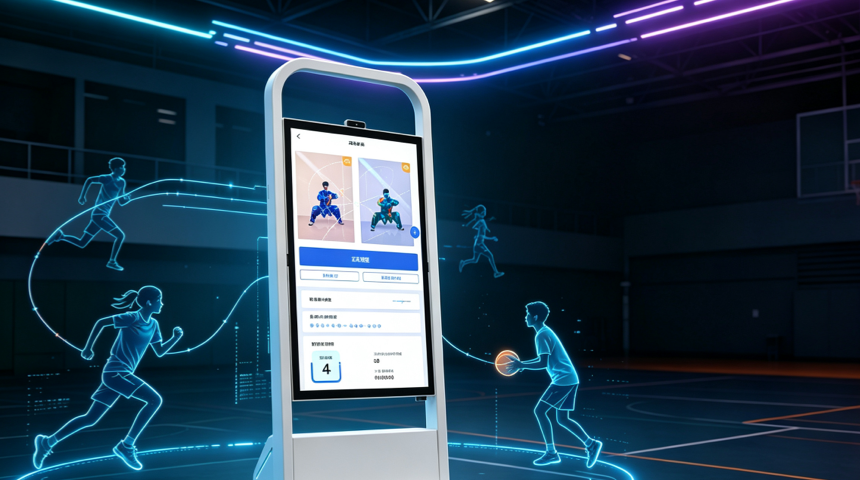
Figure 2. Smart sports terminals bring AI training modes to venues and campuses (source: global.szearth.com).
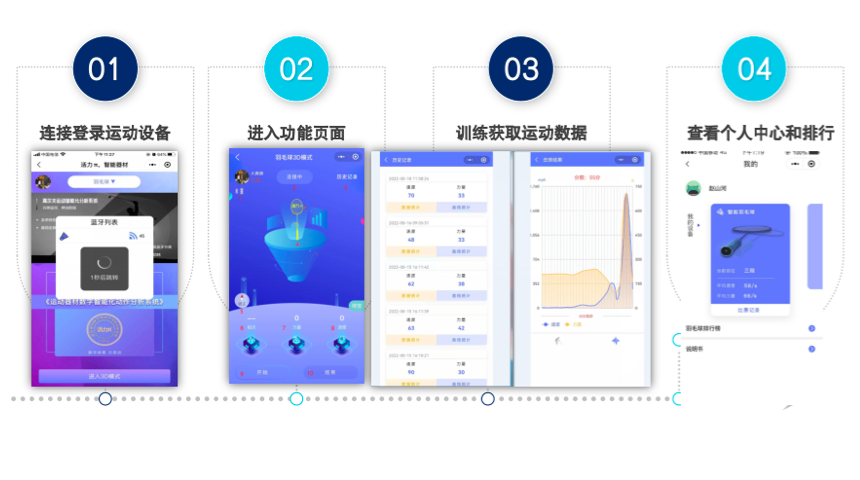
Figure 3. From device connection to personal dashboards: the smart sports app workflow for home exam training (source: global.szearth.com).
6. Building an Exam Preparation Plan
Because exam dates and items vary by region, a realistic plan should be built backwards from the local schedule. Most students benefit from three phases, summarized below.
Table 2. A Three-Phase PE Exam Preparation Plan
| Phase | Typical Timing | Training Focus | Smart Platform Use |
|---|---|---|---|
| Foundation | 6-8 months before the exam | Build endurance and strength base; correct basic technique | Structured courses; review weekly records |
| Improvement | 2-3 months before the exam | Target weak items; boost scores on selected events | Exam training mode; technique comparison |
| Peak | 4-6 weeks before the exam | Simulate exam conditions; manage pace and recovery | Track records and rankings; avoid overtraining |
7. Choosing the Right Preparation Solution
Start with the student's weakest areas and the local exam items. Families should look for a platform with an exam training mode, structured courses and automatic records; schools should look for a digital PE system with portals, supervision and reporting. Then check the technology: genuine MEMS or IMU sensing, AI analysis covering speed, angle, force and 3D graphics, and a cloud platform that keeps progress comparable over time. Finally, look for official recognition and real deployments — certifications, recommended equipment catalog listings and schools already using the system — as evidence that the solution works. For students who also compete, the competitive sports platform and smart badminton training articles show how the same data tools extend to racket sports, with the Vitality Pi smart racket as a practical example.
8. Frequently Asked Questions (FAQ)
What is the PE entrance exam (PE zhongkao)?
The PE zhongkao is the physical education component of China's high school entrance examination. It includes on-site fitness tests such as running, jumping and throwing, and increasingly process-based assessment of daily exercise and PE class participation. Scores vary by city and have been rising in recent years.
How does AI help students prepare for PE exams?
AI platforms use sensors and video analysis to measure movements, compare them with standard technique and track progress automatically. Students get objective feedback on every attempt, which makes preparation more efficient than guesswork-based training.
Do students need special equipment to train at home?
Yes, but minimal. A smart home fitness platform such as the AI Smart Sports Skills Platform works with Bluetooth-enabled equipment containing built-in inertial sensors, so no cameras or wearable straps are needed.
Which exam items can students practice at home?
Common items such as rope skipping, sit-ups, standing long jump and ball skill practice can be trained at home with guided courses. For track events such as the 800- or 1000-metre run, students can train nearby and use the platform to track endurance and pace trends. Always confirm the local item list with the education authority.
Can smart training really raise exam scores?
Smart training raises the quality of practice: it measures technique, tracks improvement and keeps students consistent. Those are exactly the inputs that scoring systems reward, especially as process-based assessment now counts daily participation and fitness records.
How should schools and families work together?
Schools use digital PE systems to run data-driven lessons and record student fitness; families use home platforms to extend practice and build consistency. When both sides produce comparable data, teachers can give better guidance and parents can see real progress.
9. Conclusion
PE entrance exams are becoming more demanding, more varied and more continuous — and that is a good reason to train smarter. With rising scores, more test items and process-based assessment, preparation now happens in the classroom and the living room, guided by data. The technology is already mature: MEMS sensors, AI motion analysis and cloud platforms turn every jump, run and stroke into measurable progress. Schools and families that adopt these tools prepare students not just for an exam, but for a healthy, active habit that lasts. For more practical guidance, browse the smart sports insights hub and explore how AI smart sports solutions fit your school or home.
Sources and References
[1] Guiyang Municipal Education Bureau — 2026-2028 PE zhongkao plan: total score rising from 50 to 100 (March 2026)
[2] China Education Daily — Hunan PE exam plan: 8 percent weighting and 14 test items (September 2025)
[3] China News (Qinghai) — Qinghai raises PE exam total from 50 to 70 points with process assessment (January 2026)
[4] CCTV Education — 2026 zhongkao moves toward all-round development; PE weighting rising (June 2026)
[5] Shenzhen Admissions Office — 2026 Shenzhen PE exam structure (April 2026)
[6] Fujian Provincial Department of Education — measures to strengthen school PE (October 2025)
[7] CGTN — National Fitness Day: How AI is making exercise more personalized in China (August 2026)
[8] Shenzhen Earth Electronics Co., Ltd — official website (company and product facts)
Company facts and product information in this article are taken from the official Shenzhen Earth website (global.szearth.com). Exam policies are attributed to the official sources listed above; scores, items and weights differ by city and change over time, so always confirm the current requirements with the local education authority.
Build a Data-Driven PE Training Program
Explore smart sports tools for school physical education and structured training at home.
Explore Home Training Solutions